


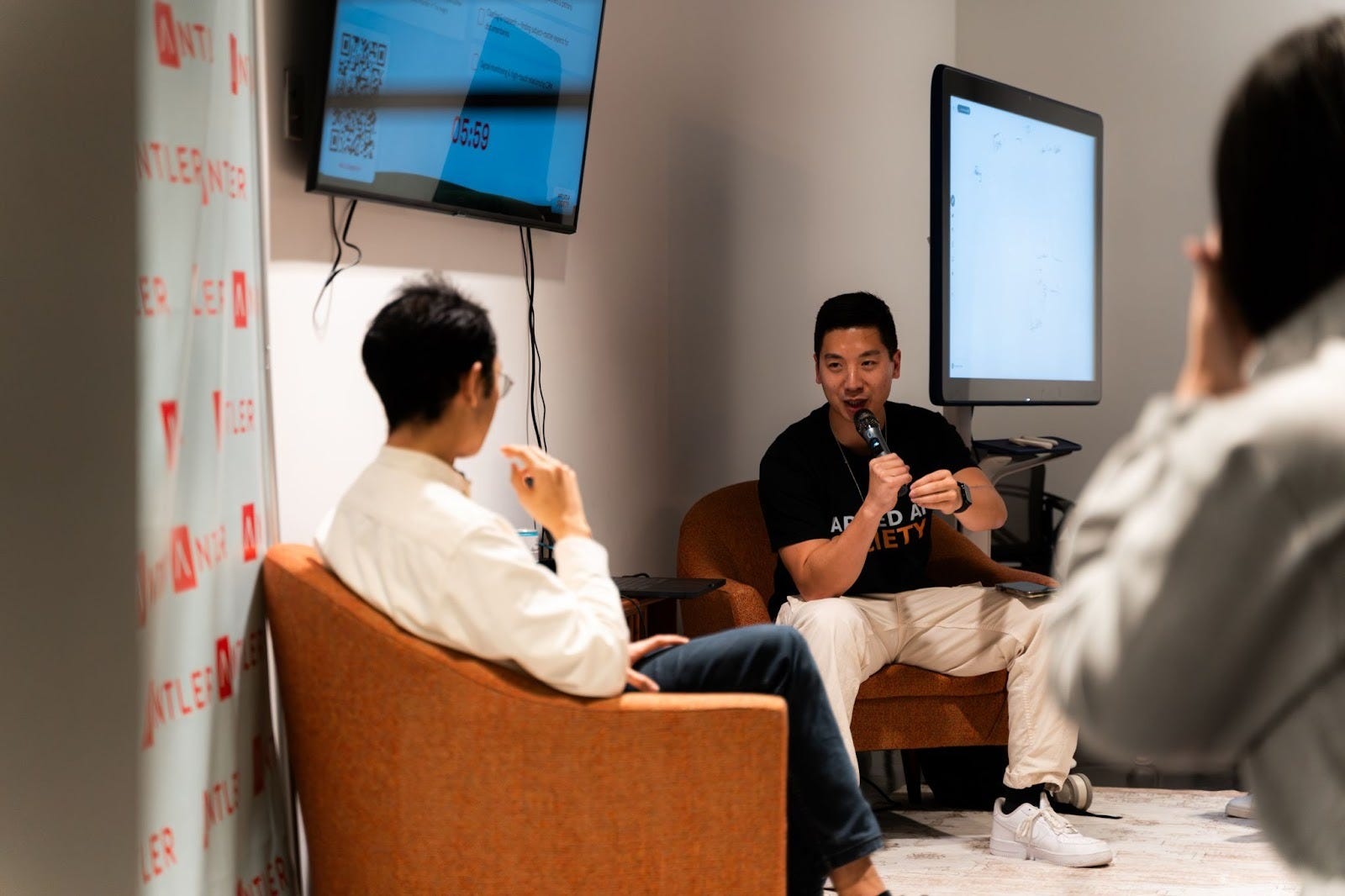
My friend Ien is one of the most soulful people I know. He’s also one of the most talented and experienced media executives in the world.
He co-built Jubilee Media, a YouTube channel launched in 2017 that brought people from opposing sides together for real, empathetic conversations about the most contentious issues of our times. It went mega-viral.
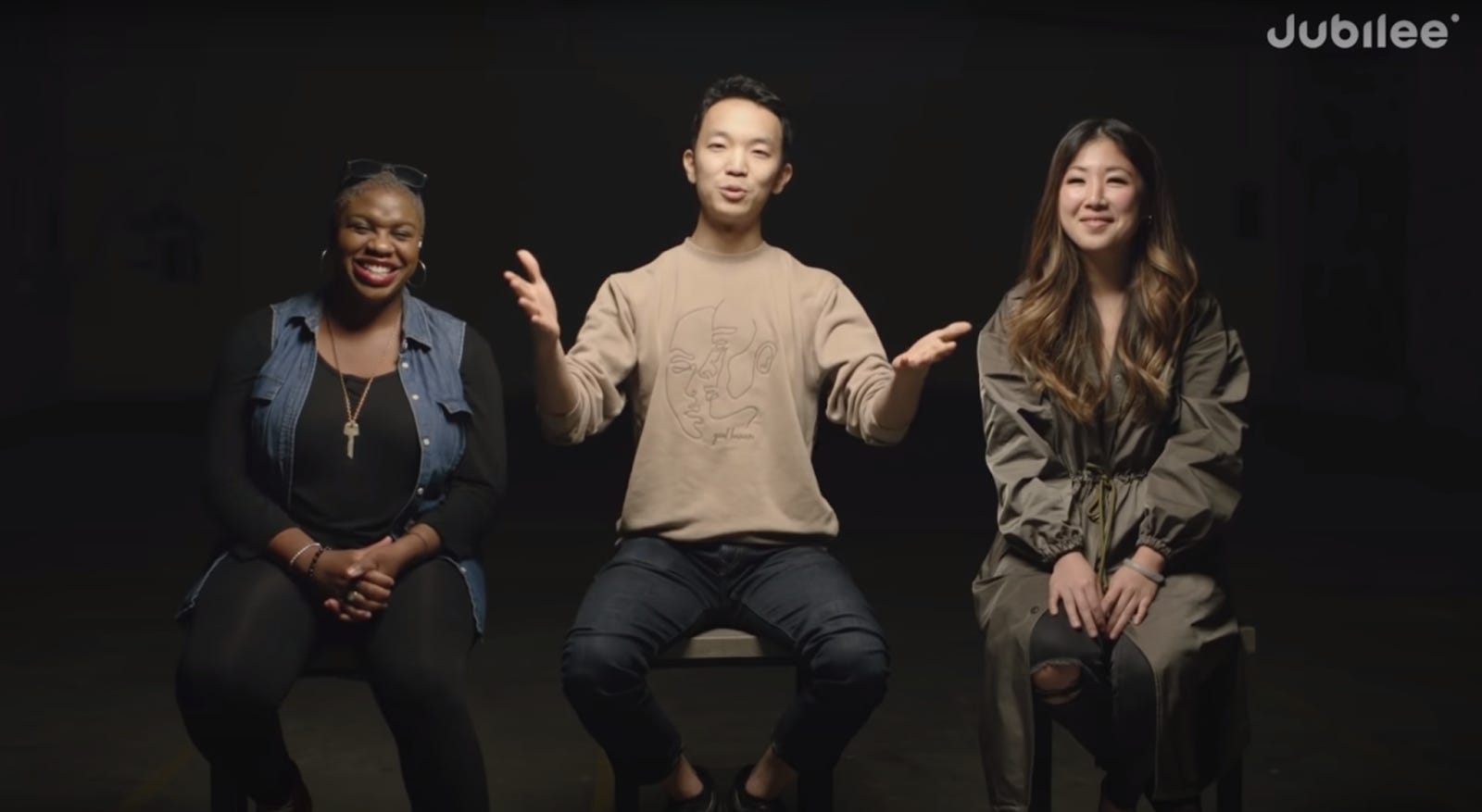
Hundreds of millions of people watched those videos.
And it nearly destroyed him.
“The whole land of media is tilted toward attention extraction,” Ien told me last week. “The organization wasn’t quite able to keep integrity with the original mission. It was heartbreaking.”
By 2020, Ien had burned out so hard that the experience became what he calls his “south star.” A permanent reminder of the road not to take. It was a deeply painful experience he says he would never wish upon anyone else, but turned out to be a blessing in disguise.
When anything starts to feel like that heaviness again, he knows. That’s not it.
So Ien left. He spent years traveling, talking to people, searching for a different way to tell stories. One that didn’t require sacrificing his soul to the algorithm.
He got clear on what he actually wanted to make. Not “content.” Not viral videos. Soulful, artful films that will stand the test of time and nurture true, lasting impact on the spiritual formation of those watching. Stories about people going through real transformation. Stories designed not to make a quick flash, but to create deep lasting resonance and spark inner evolution.
But to pull that off as a solo creative operator, he’d need to be freed from the enormous amount of soulless work.
That’s where applied AI comes in.
His Latest Project: A Film About Grief
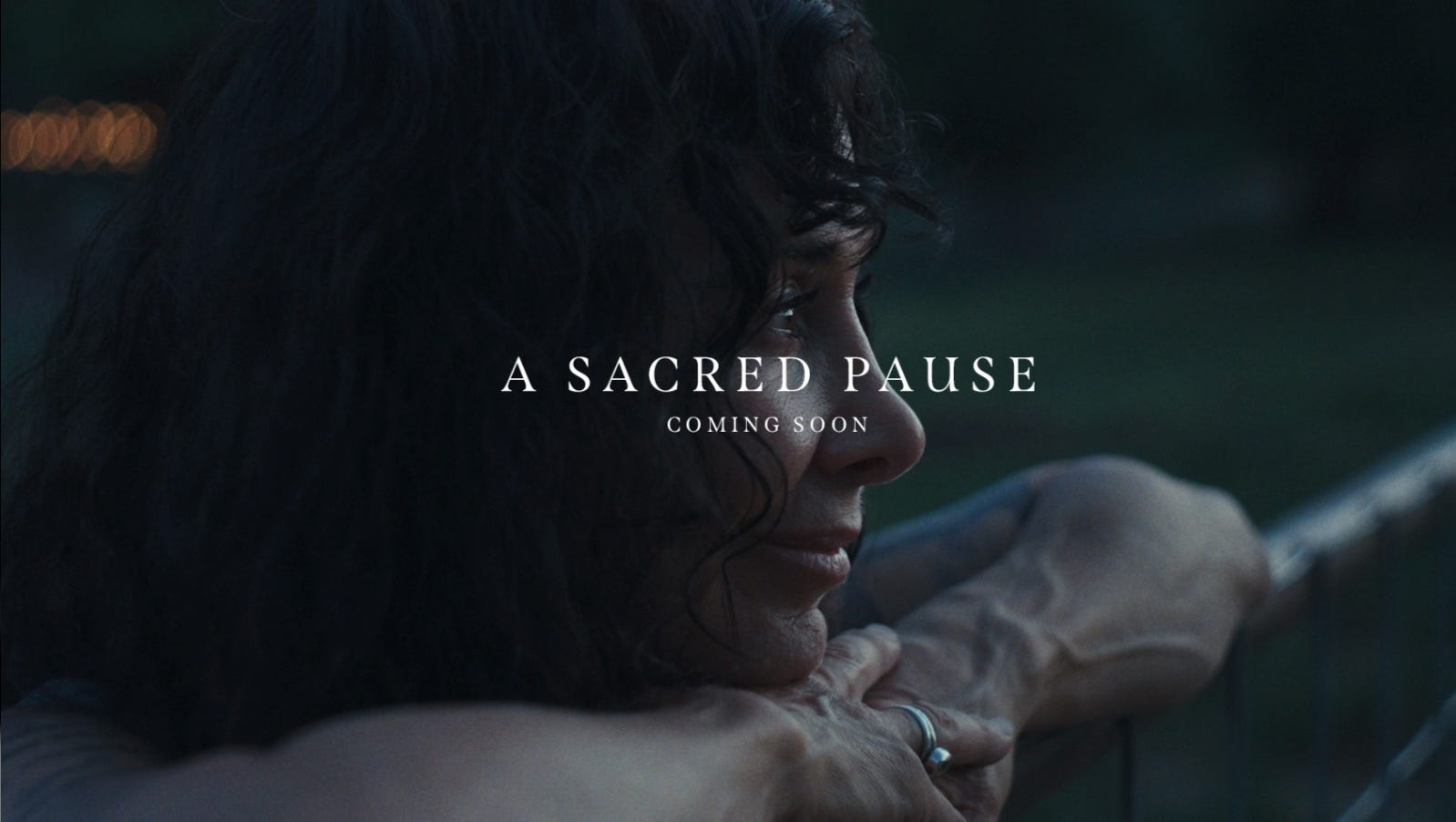
Recently, Ien produced a film called A Sacred Pause. It follows six people who’ve experienced the worst kind of loss.
A father whose three children were murdered.
A mother whose 14-year-old son died.
A woman whose twin brother was killed.
They come together at the Selah Carefarm near Sedona, an 18-acre therapeutic sanctuary founded by Dr. Joanne Cacciatore in 2016. She lost her own infant child decades ago and spent the rest of her career building the first U.S. carefarm for traumatic grief. Nature-based, animal-assisted therapy alongside counseling. A place for people to process what most of the world tells them to move on from.
It’s a 30-minute short film having its world premiere in Sedona next month.
When I watched the trailer with Ien, I had to take a breath.
This is not content. This is not engagement bait. This is profound art that cares more about reaching the right 50 people than 5 million.
Ien calls it “deepcasting.” Not broadcasting. Deepcasting.
“I’d rather get five hundred views and all five hundred people connect deeply with it,” he told me, “rather than a million views where no one is actually stirred by what they’ve watched.
“At Jubilee, videos would literally get millions of views but barely any people would convert if we had a call to action. I’m talking like less than .1% conversion rates. But with this film, the trailer got only 4,300 views and raised over $50,000 with that.”
Ien’s philosophy of deepcasting is not just a feel-good mentality; it’s a far more effective way of doing business in a world saturated with surface-level noise.
This kind of deepcasting work requires everything you have. Your attention. Your taste. Your spirit.
And that’s why it’s so powerful. It resonates at a level no doomscrolling “content” can.
You can’t automate the soul of a film about grief.
The Operational Trap
But it isn’t just soulful, soul-requiring work that goes into a film. There’s a category of work that drains artists like Ien, and keeps them from just filling their day with truly artistic work.
Ien runs what is essentially a one-man studio. Release forms, contracts, W-9s, expense tracking. All manual. All Google Sheets and one-by-one emails. Across multiple simultaneous productions.
It’s not only every film production that requires these tasks. Distributing the films after they’re completed is a daunting journey in itself.
Finding the right people to share his work with. Not everyone. The right people. The museum curators and cultural institutions, the universities with relevant programs, the nonprofit leaders, the grief counselors, the people who would actually be moved by this film and would screen it for their communities.
“I want to find the most deeply value-aligned people and institutions to share this film with and add meaningful value to their community,” Ien explained. “Not blast 10,000 people or just throw the film online. I want the surgical approach that builds relationships, sparks deep reflection, and builds in the real world instead of just on screens.”
Doing that surgically requires research. Context. Memory. Knowing that the last time you spoke with this nonprofit director was two years ago, and what you talked about, and that their daughter just graduated.
It requires an operating system that takes care of anything that’s not the high-touch relationship-building and human to human connection.
And building a system like this from scratch, by hand, while also making timeless art?
That’s where over-extension starts to bleed in. Not from the creative work. From the operational weight crushing the creative work.
Imagine if some of the most talented, soulful artists in the world had to spend half their time doing administrative tasks and busywork. That’s what’s happening today.
And this is the problem applied AI was born to solve.
“My Dream Is Basically Making Studio Ghibli”
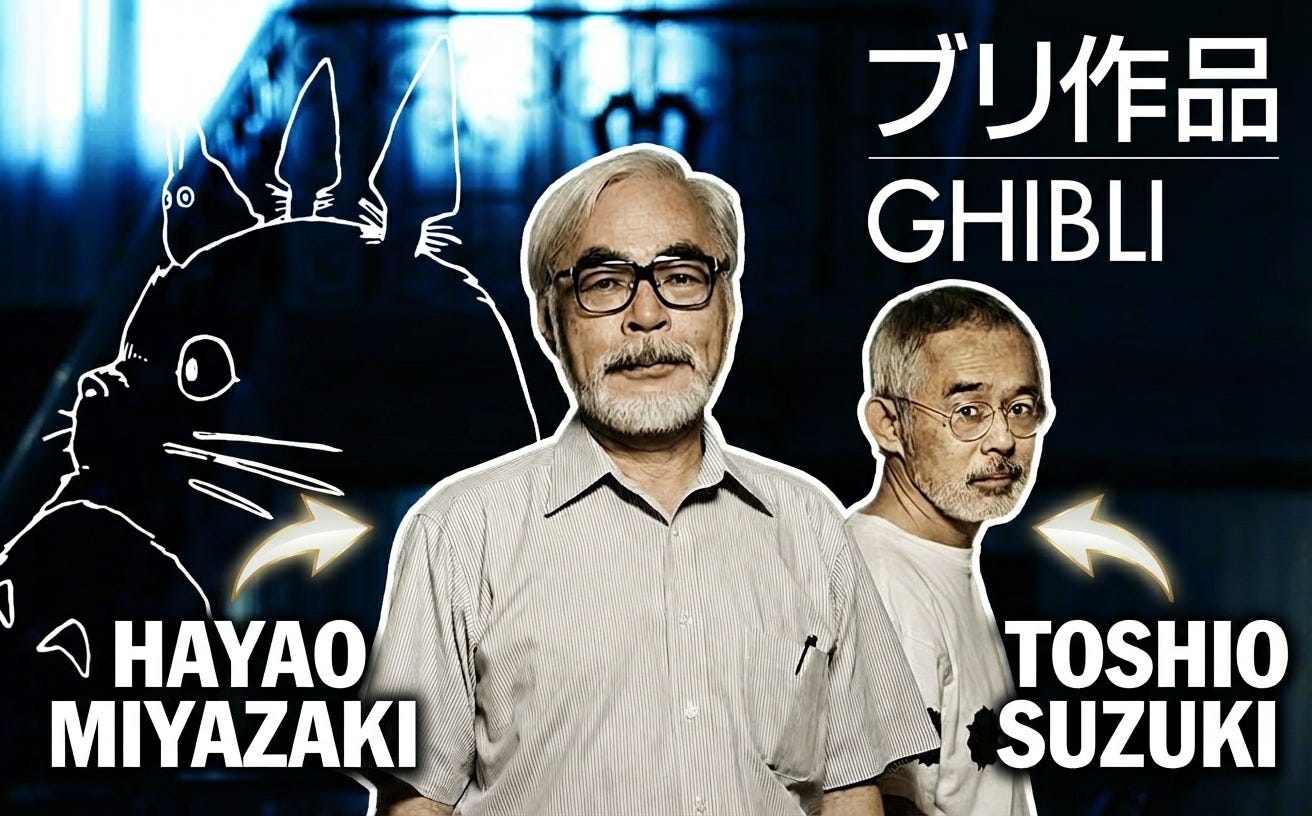
Studio Ghibli. The legendary Japanese animation studio behind Spirited Away, My Neighbor Totoro, Princess Mononoke.
Ien broke it down.
“The core team is Miyazaki, who is the legendary animator, paired with Toshio Suzuki. Toshio is the genius businessman. He’s the guy that basically protects the soul and allows Miyazaki to focus solely on the work.”
Then Ien looked at me and said:
“My dream is to have a Toshio so I can purely focus on the soulful creative work.”
And I realized: AI, properly applied, could be his Toshio.
Not replacing the soul. Not outsourcing his creativity. Protecting it. Handling the operations, the research, the admin, the busywork.
So the human can do the one thing only a human can do.
Create from spirit.
Cathedrals, Not Clickbait
We’re at an inflection point. A new chapter where the machines are finally getting good enough to handle the soulless work. The expense classification. The contract routing. The partner research. The scheduling. All the operational weight that buries creative people under busywork and burns them out.
But here’s what the machines cannot do: feel grief. Feel the heart of a story. Look someone in the eyes and connect. Choose to make a cathedral instead of clickbait.
That’s the work humans were uniquely designed for. The soul work. The work that only an image bearer of God can do.
This is what I believe God is showing us right now. That applied AI isn’t just a career-advancing opportunity. Utilized correctly, it’s an opportunity to protect and free the soul.
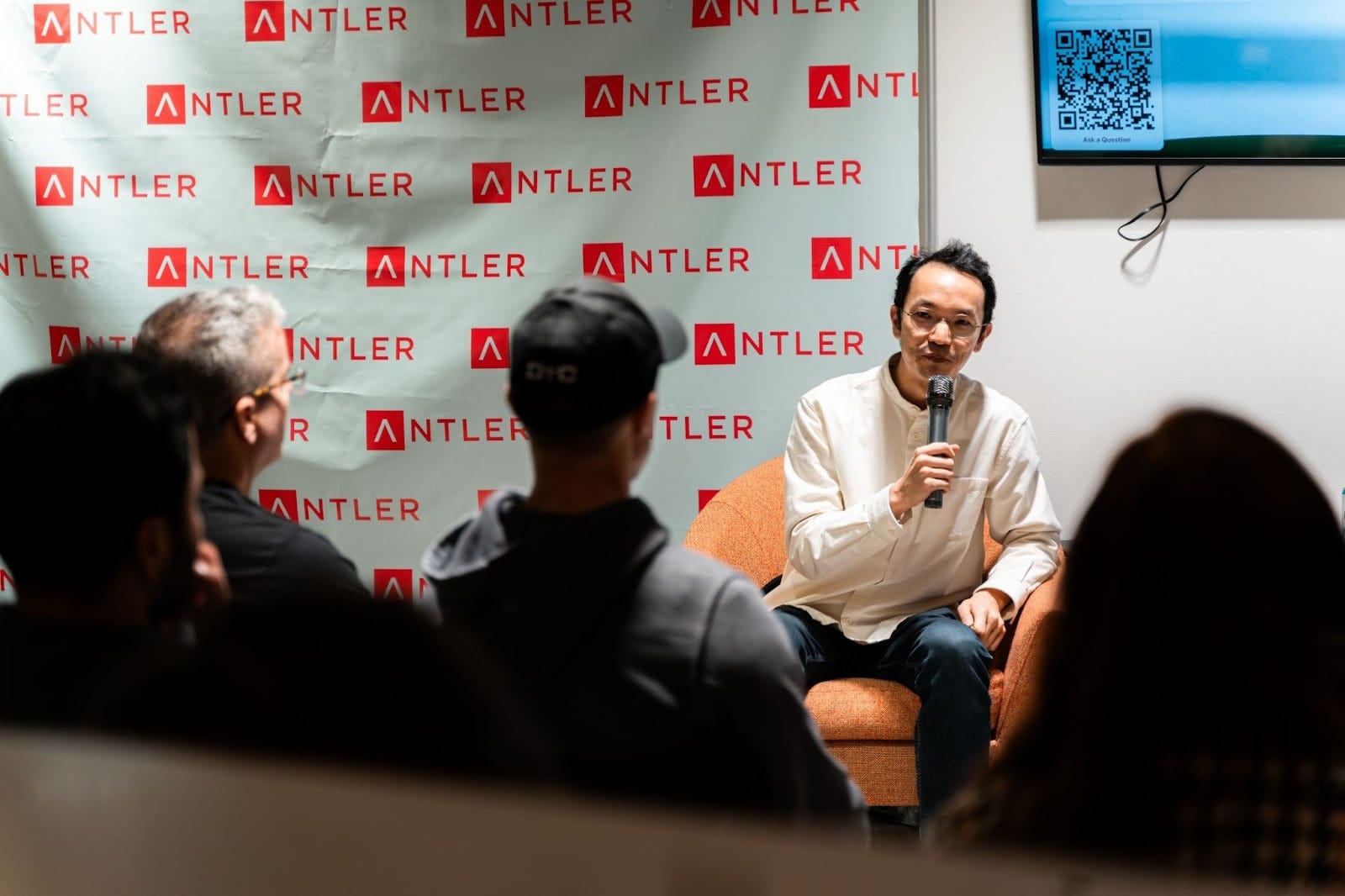
“The mistake is to think that soul can be outsourced,” Ien told a room full of engineers at an event I hosted last week. “Wouldn’t it be a tragedy to outsource dance? I like dancing.”
People in the audience really took that in.
Integrating AI and Soul
I’ve been hosting workshops helping engineers and business owners who want to help people actually apply AI in a tangible, customized way to their businesses.
And what I’m realizing is that the bottleneck right now isn’t innovation. It’s implementation. There are millions of businesses that need help applying what already works, with tools that already exist. And there are tens of thousands of talented people who could help them. But currently, there’s an incredible gap between those two groups. My applied AI work exists to bridge that gap.
At a recent event, I conducted an experiment. I brought Ien, a non-technical creative director, filmmaker, and artist who’s never coded, on stage with a brilliant AI engineer named Rostam.
I said: let’s do this live. 30 minutes. Let’s architect solutions to Ien’s real business problems. Right here, right now.
Within less than half an hour, Rostam designed a custom CRM that would take in the context about all of Ien’s current film projects, pull information from Ien’s Gmail history, extract and organize key memories about every current relationship, evaluate new potential contacts by mission alignment, enrich it with LinkedIn and web data, and consistently suggest new mission-aligned partners to reach out to for each film.
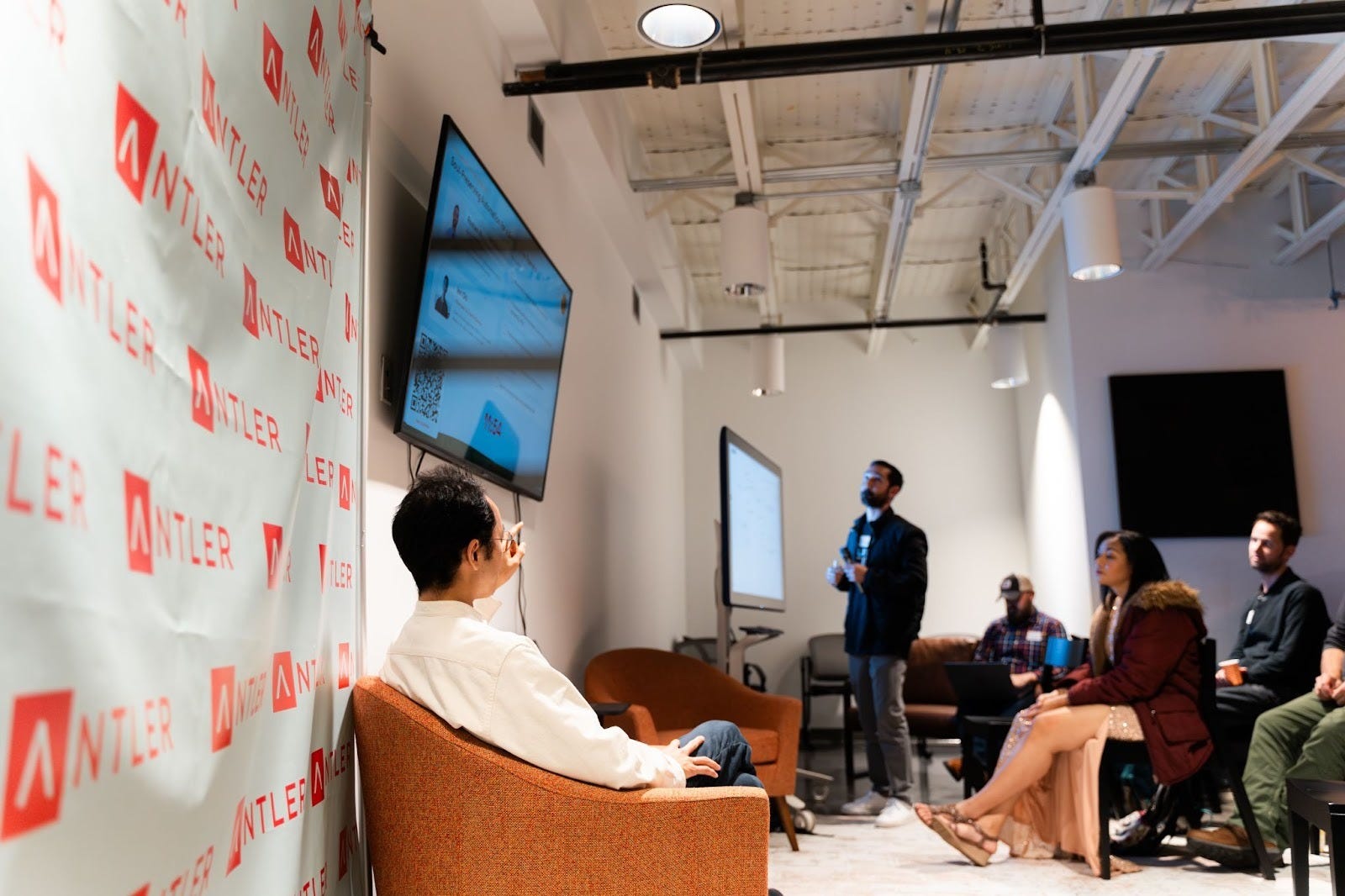
He estimated it would take him three days to build the first version.
“So, this would constantly be finding new mission-aligned partners for us, and at the same time be retaining the memory from every meeting and conversation we’ve had, like remembering the daughter’s birthday of a CEO I recently met with last week?” Ien asked.
“Yep!” Rostam said.
“That would be amazing.”
This is what applying AI looks like in practice. Not a science fiction demo. Not a chatbot. A real person with a real business getting a real solution designed for their specific needs, in less than half an hour.
More Human, Not Less
Ien put it perfectly: “There’s going to be so much created without soul that it’s going to make truthful things that much more potent. People are going to really be looking for soulful, heartfelt work. It’s already happening.”
He’s right. And the gap is only going to widen.
The future of quality work belongs to people who will embrace applied AI, not as a way to outsource creativity, but to automate everything that doesn’t require soul and then pour all their freed-up energy into the work that does, to create even more soulful, more powerful art with greater lasting impact.
And the people who resist will keep grinding manually until they burn out or get outrun.
We are image bearers of God. We’re not assembly line workers. We’re not data entry clerks. We’re not meant to spend our days on expense classification and contract routing.
We’re meant to tell stories that make people weep. To build communities where people connect on a soul-to-soul level. To create beauty that points back to the source of all beauty.
Trust Comes First
After the event, Ien took me out to dinner and told me something I won’t forget.
“Gary, you’ve transformed a lot in the past couple months. It’s quite amazing. A complete contrast from what I saw less than a year ago.”
He’s not wrong. I burned out too. In a previous season, I was chasing the wrong metrics, fell victim to pride, and lost my way.
But in the quiet season that followed, I was reminded through prayer and community that I have a purpose: to help people. To help deeply mission-aligned people like Ien focus even more on their God-given talents. Using applied AI.
Ien was the first non-techy business owner I put on the spot for the Applied AI Live series. An artist and storyteller who walked into a room full of engineers, and walked out seeing a future where he could run a one-man film studio with AI handling everything that doesn’t require his soul.
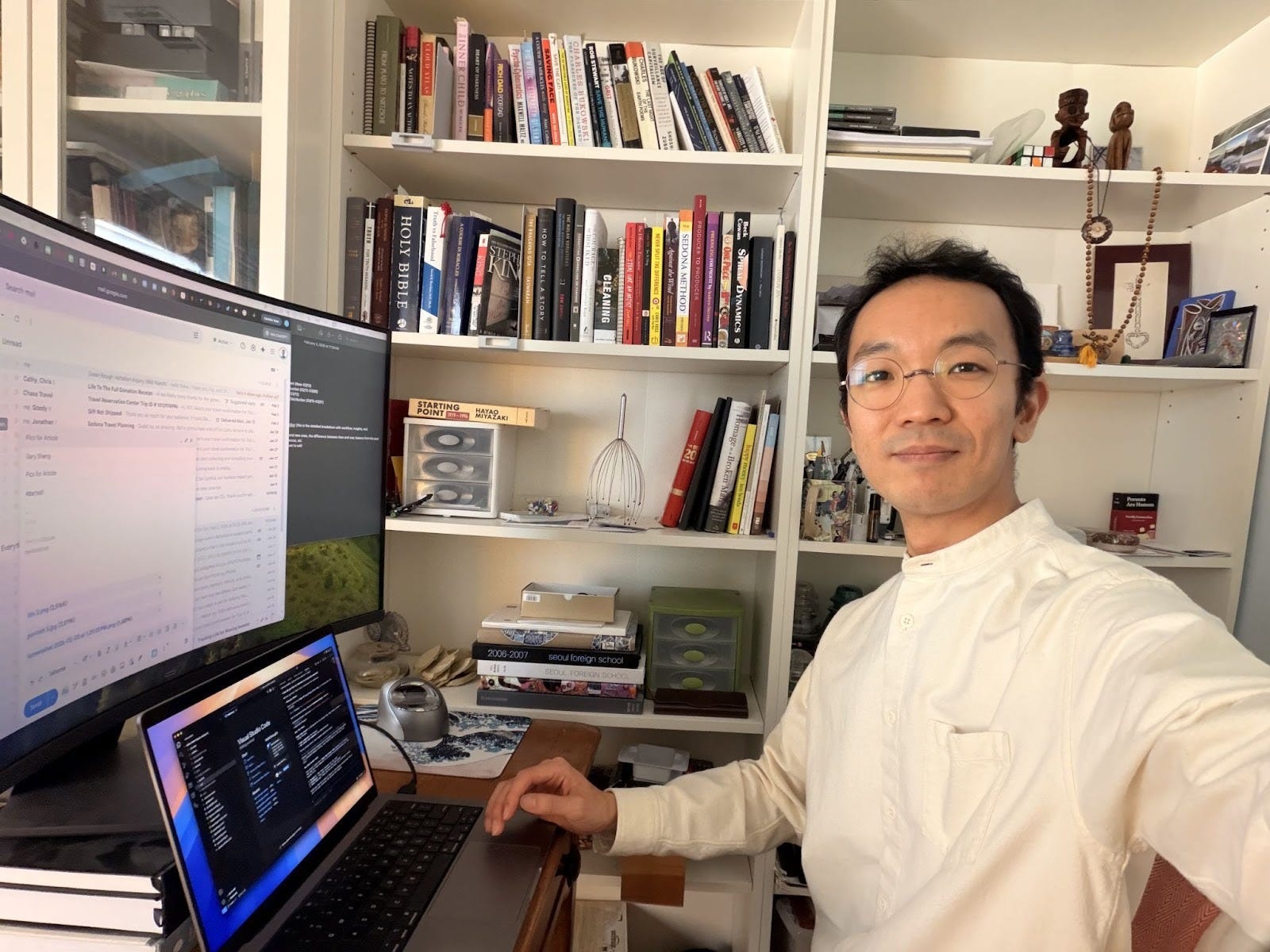
On the Uber ride home, we talked about trust. About how Ien’s learned to stop controlling outcomes and let God orchestrate.
“Trust comes first,” he said. “And then the fruits come.”
He’s right.
The machines are here. They’re only getting better. The question isn’t whether we’ll use them.
The question is whether we’ll use them to set our souls free.
Not less human. More human.
Not less soul. More soul.
I know what I’m choosing. And I’m building a community of people who are choosing the same.
If you’re an engineer, business owner, or creative operator who wants to apply AI in a way that preserves and amplifies what makes us human, DM me on LinkedIn and I’ll try to match you with the right person.
If you resonate with Ien and want to connect with one of the most skillful soulful storytellers I know, reach out to him and check out his work. He’s just getting started.
“Choose to make a cathedral instead of clickbait.” Love it brother. Great story and example.
Beautiful 🙏🏼🙏🏼🙏🏼